

Kaal Sarp Dosh Puja in Trimbakeshwar 2026 – Complete Guide: Vidhi, Cost, Muhurat & Booking
Are you facing repeated failures in career despite hard work? Unexplained health problems, delayed marriage, disturbing dreams of snakes, or financial loss that never seems to end? According to Vedic astrology, these recurring obstacles may be the result of Kaal Sarp Dosh in your kundali and the most powerful remedy is performing Kaal Sarp Dosh Puja in Trimbakeshwar.
Trimbakeshwar, located just 28 km from Nashik in Maharashtra, is home to one of the 12 sacred Jyotirlingas of Lord Shiva. It is considered the most powerful and most authentic location in all of India to perform Kaal Sarp Dosh Nivaran Puja. No other Jyotirlinga holds the specific astrological and scriptural significance for this puja that Trimbakeshwar does.
In this complete guide, Pandit Shivanand Shastri Ji (20+ years of experience, contact: +91 9156498161) walks you through everything you need to know before booking your puja — the real vidhi, accurate 2026 muhurat dates, transparent cost breakdown, what symptoms to look for, all 12 types of Kaal Sarp Dosh, the complete samagri list, and step-by-step booking guide.
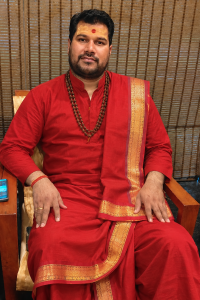
Meet Pandit shivanand Guruji
1. What is Kaal Sarp Dosh?
Kaal Sarp Dosh is a powerful astrological condition that occurs in a person’s birth chart (kundali) when all seven planets — Sun, Moon, Mars, Mercury, Jupiter, Venus, and Saturn — are positioned between Rahu (the serpent’s head) and Ketu (the serpent’s tail). This creates what is called Kaal Sarp Yoga or Kaal Sarp Yog.
The word “Kaal” means time or death, “Sarp” means serpent, and “Dosh” means flaw or defect. When this planetary alignment occurs in the kundali, the native’s life is believed to come under the shadow of Rahu and Ketu, the two shadow planets that represent karma, illusion, fear, and the cycle of birth and death.
This dosh is not a punishment — it is a karmic signal. It indicates that the person has unresolved karma from a past life connected to serpents, ancestors, or unfulfilled duties. Performing the Kaal Sarp Dosh Puja is the Vedic way to acknowledge, honor, and resolve this karma to restore balance in the native’s life.
Important: Not every person born under Kaal Sarp Yog suffers equally. The intensity of the dosh depends on which house Rahu occupies, the type of Kaal Sarp Dosh, and the overall strength of the horoscope. Always consult an experienced pandit or astrologer before concluding you have this dosh.
2. Symptoms of Kaal Sarp Dosh — How to Know If You Have It
Before looking at remedies, identifying the dosh is the first step. The following are the most commonly reported symptoms of Kaal Sarp Dosh:
Career and Financial Symptoms:
- Repeated failures in business or job despite genuine hard work and qualifications
- Career stagnation — promotions that never come, deals that fall apart at the last moment
- Financial instability, unexpected losses, and inability to save money
- Projects that start well but collapse midway without clear reason
Health Symptoms:
- Recurring illnesses that do not respond well to treatment
- Chronic anxiety, panic attacks, and unexplained fear
- Disturbing or recurring dreams — especially dreams involving snakes, dark water, or being trapped
- Fatigue and low energy without a medical cause
Relationship and Family Symptoms:
- Unexplained delays in marriage even when the person is willing and eligible
- Repeated breakups or relationship failures
- Family disputes without clear cause, particularly between siblings or between parents and children
- Difficulty conceiving a child or unexplained miscarriages
Spiritual Symptoms:
- A persistent feeling that progress is blocked by an invisible force
- Feeling spiritually disconnected, restless, or without purpose
- A general sense of being unlucky compared to peers
Note: Having one or two of these symptoms does not confirm Kaal Sarp Dosh. A proper kundali analysis by a qualified pandit is necessary for confirmation. Pandit Shivanand Shastri Ji offers a free kundali check before puja booking — call +91 9156498161.
3. All 12 Types of Kaal Sarp Dosh Explained
Kaal Sarp Dosh has 12 distinct types, each named after a different serpent (nag) from Hindu scripture. The type depends on which house Rahu occupies in the birth chart. Each type has different effects on the native’s life.
| # | Name of Dosh | Rahu’s House | Primary Area Affected |
|---|---|---|---|
| 1 | Anant Kaal Sarp Dosh | 1st House (Lagna) | Self-image, health, overall luck |
| 2 | Kulik Kaal Sarp Dosh | 2nd House | Wealth, family, speech |
| 3 | Vasuki Kaal Sarp Dosh | 3rd House | Siblings, courage, communication |
| 4 | Shankhpal Kaal Sarp Dosh | 4th House | Home, mother, property, peace of mind |
| 5 | Padma Kaal Sarp Dosh | 5th House | Children, education, creativity |
| 6 | Mahapadma Kaal Sarp Dosh | 6th House | Health, enemies, debt, legal issues |
| 7 | Takshak Kaal Sarp Dosh | 7th House | Marriage, partnerships, business |
| 8 | Karkotak Kaal Sarp Dosh | 8th House | Hidden enemies, accidents, inheritance |
| 9 | Shankhachur Kaal Sarp Dosh | 9th House | Father, religion, luck, higher education |
| 10 | Ghatak Kaal Sarp Dosh | 10th House | Career, status, authority figures |
| 11 | Vishdhar Kaal Sarp Dosh | 11th House | Income, social network, ambitions |
| 12 | Sheshnaag Kaal Sarp Dosh | 12th House | Foreign travel, spiritual growth, expenses |
Important: Anant, Kulik, and Vasuki Kaal Sarp Dosh are generally considered the most intense types and may require additional Rahu-Ketu Jaap puja alongside the main ritual. Pandit Shivanand Shastri Ji will advise which type you have after the kundali check.
4. Kaal Sarp Dosh Puja Vidhi — Step-by-Step Ritual
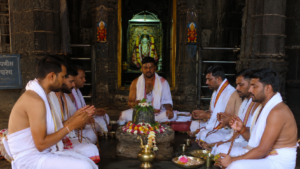
The complete Kaal Sarp Dosh Puja Vidhi at Trimbakeshwar follows a traditional 6-step Vedic sequence. A qualified pandit who shortens or skips stages is performing an incomplete ritual — this is one of the most important things to confirm when booking.
Duration: 2 to 3 hours (single day)
Step 1 — Shuddhi (Sacred Bath) The puja begins before sunrise. The devotee takes a holy dip in the Kushavarta Kund, the sacred pond at the Trimbakeshwar Temple where the Godavari River originates. This dip is not symbolic it is a karmic cleansing ritual that removes accumulated impurities and prepares the devotee’s body and mind to receive the puja’s benefits. After bathing, the devotee wears fresh clothes white or light yellow for men (dhoti), traditional saree for women.
Step 2 — Sankalp (Declaration of Intent) The devotee sits before Pandit Ji, who performs the Sankalp a formal statement of intent in Sanskrit. The Sankalp includes:
- The devotee’s full name, father’s name, and mother’s name
- Gotra (ancestral lineage)
- Current city, state, and country
- The specific purpose: “Kaal Sarp Dosha Nivarana artham”
- The desired outcome (good health, career success, marriage, peace, etc.)
The Sankalp links the ritual specifically to the devotee and activates its intent.
Step 3 — Ganesh Puja and Navagraha Puja No Hindu ritual begins without Lord Ganesha’s blessing. The pandit invokes Lord Ganesha to remove all obstacles in the puja. This is followed by a Navagraha (nine-planet) puja, which is particularly important because Kaal Sarp Dosh is fundamentally a Navagraha issue. All nine planets are offered prayers and the specific mantras are chanted to pacify Rahu and Ketu.
Step 4 — Nag Puja (Serpent Worship) This is the heart of the Kaal Sarp Dosh Puja. Snake idols made of silver, copper, and lead are placed on a clean surface and bathed with panchamrit (milk, curd, ghee, honey, sugar). The pandit chants 1,008 times to 125,000 times (depending on the package) of the Kaal Sarp Dosh Nivaran Mantra and the Rahu-Ketu mantra. Bilva leaves, flowers, red flowers, and black sesame are offered to the serpent deities.
Key mantra chanted during Nag Puja: “Om Namo Bhagawate Vasudevaya Namah” (108 times) “Rahu Beej Mantra: Om Bhraam Bhrim Bhraum Sah Rahave Namah” (108 times) “Ketu Beej Mantra: Om Sraam Srim Sraum Sah Ketave Namah” (108 times)
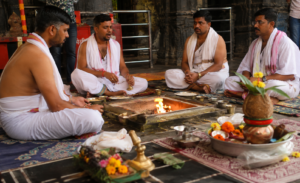
Step 5 — Havan (Sacred Fire Ritual) A Havan (fire offering) is performed using a mixture of specific herbs, ghee, and sacred materials. The Havan purifies the environment and creates a conduit for the mantras to reach the divine. Specific Kaal Sarp Dosh Nivaran herbs are added to the fire to neutralize the malefic effects of Rahu and Ketu.
Step 6 — Abhishek and Final Aarti The puja concludes with an Abhishek (sacred bath) of the Lord Shiva Jyotirlinga — pouring Gangajal, milk, and honey over the Shivling while chanting the Maha Mrityunjaya Mantra. The pandit then performs the final Aarti and distributes prasad (blessed food offering) to the devotee.
After the puja, the devotee receives the puja report, photos (in some packages), and post-puja guidance from Pandit Shivanand Shastri Ji.
5. Kaal Sarp Dosh Puja Cost in Trimbakeshwar 2026
This is the question most devotees search for first — and most websites avoid answering directly. Here is the complete and transparent cost breakdown for Kaal Sarp Dosh Puja in Trimbakeshwar as of 2026:
Package-Wise Cost:
| Package | Location | What’s Included | Approx. Cost |
|---|---|---|---|
| Basic Group Puja | Hall outside temple | Group setting, basic vidhi, 1 pandit | ₹1,100 |
| Standard Hall Puja | AC Hall | Individual puja, 1 pandit, basic samagri | ₹1,500 – ₹2,100 |
| AC Hall | Hall outside temple | Individual, inside temple, 1–2 pandits | ₹2,100 – ₹2,500 |
| Complete Puja Package | Hall outside temple | 2 pandits, full vidhi, 1,008 Rahu-Ketu mantra jaap, samagri included | ₹5,100 – ₹5,800 |
What Affects the Final Cost:
- Number of pandits — more pandits means faster mantra completion and higher energy
- Type of Kaal Sarp Dosh — intense types like Anant or Kulik may require additional Rahu-Ketu Jaap
- Samagri — Pandit Shivanand Shastri Ji arranges all samagri; you do not need to bring anything
- Location inside temple — puja closer to the Jyotirlinga is considered more powerful
- Travel and accommodation — not included in puja cost; hotel stay in Trimbakeshwar starts at ₹800–₹3,000 per night
Hidden Cost Warning: Some pandits charge separately for samagri, temple donation, prasad cloth, and travel inside the temple. With Pandit Shivanand Shastri Ji, all costs are declared upfront. No surprise charges. Call +91 9156498161 for a complete cost quote after your free kundali check.
Samagri List for Kaal Sarp Dosh Puja
For devotees who want to know what is used in the puja, here is the complete Kaal Sarp Dosh Puja Samagri list. Note: Pandit Shivanand Shastri Ji arranges all samagri. You do not need to bring these items yourself.
Metal Serpent Idols (Nag Pratima):
- One silver serpent idol
- One copper serpent idol
- One lead serpent idol
For Abhishek (bathing of serpent idols):
- Gangajal (sacred river water)
- Raw milk
- Curd
- Pure cow ghee
- Honey
- Sugarcane juice
- Fragrant oil (sesame)
Offering Materials:
- Red flowers (Hibiscus / Kaner) — 108 pieces
- Black sesame (Kala Til)
- Bilva leaves (Bel Paan) — fresh, unbroken
- Fresh coconut
- Fruits (banana, guava, seasonal)
- Betel leaves and betel nuts (Paan and Supari)
- Turmeric and kumkum
- Sandalwood paste
Havan Materials:
- Havan samagri (mixed herbs)
- Pure cow ghee for the fire
- Mango wood sticks
- Camphor (Kapoor)
- Incense sticks (Agarbatti)
Puja Accessories:
- Copper Kalash (sacred pot)
- Red cloth (for serpent idol cover)
- Cotton wicks for diya
- Ghee diyas (earthen lamps)
- Sacred thread (Mauli)
- Yellow mustard seeds
For Devotee:
- White or light yellow dhoti (for men)
- White/light saree or traditional attire (for women)
- Rudraksha mala (optional, provided if not available)
Best Muhurat Dates for Kaal Sarp Puja in 2026
Choosing the right muhurat (auspicious timing) is very important. The cosmic energies during specific lunar phases and sacred days amplify the power of the puja and its results.
Most Powerful Days for Kaal Sarp Dosh Puja:
Amavasya (New Moon) Dates 2026 — Amavasya is the single most powerful day for Kaal Sarp Dosh Nivaran. On this day, the moon’s energy is at its lowest, which uniquely strengthens serpent-related remedies.
- July 24, 2026 (Shravan Amavasya — most powerful, coincides with Shravan month)
- August 22, 2026
- September 21, 2026
- October 20, 2026
- November 19, 2026
- December 19, 2026
Nag Panchami 2026 — The most sacred day for serpent worship in the entire Hindu calendar. Performing Kaal Sarp Dosh Puja on Nag Panchami is considered extraordinarily effective.
- August 7, 2026 (Nag Panchami — book well in advance, slots fill very fast)
Shravan Month (Sawan) 2026 — The entire Shravan month (July 22 to August 19, 2026) is considered auspicious for Lord Shiva worship. Any day in Shravan, especially Shravan Somvar (Monday) is highly recommended.
- Shravan Somvars 2026: July 27, August 3, August 10, August 17
Maha Shivratri — Passed for 2026 (February 26, 2026). Mark the date for 2027 if you missed it.
Pradosh Vrat — The evening of the 13th lunar day (Trayodashi). Occurs twice every month. Recommended for Shiva-related pujas.
Every Sunday and Tuesday — Good for Rahu-Ketu balance even outside the above special dates.
Book 2–4 weeks in advance for Amavasya and Nag Panchami dates. Pandit Shivanand Shastri Ji has limited slots. Call or WhatsApp +91 9156498161.
6. Dress Code and Preparation Rules
Following the proper dress code is mandatory for puja inside Trimbakeshwar Temple. The priests enforce these rules strictly.
For Men:
- Wear a white or light cream dhoti (cotton or silk)
- No shirt is required inside the puja area — traditionally men perform the puja bare-chested
- For general darshan, kurta-pyjama is acceptable
- No jeans, shorts, or graphic T-shirts allowed inside the puja premises
- Go barefoot — footwear is not allowed inside the temple
For Women:
- Wear a light plain saree or salwar kameez in white or light color
- Avoid black clothing (considered inauspicious for ritual)
- Avoid heavy jewellery, strong perfume, or synthetic fabric during puja
- Ensure clothing is clean, modest, and comfortable (puja can last 2–3 hours)
Pre-Puja Preparation (Starting the night before):
• Observe a vegetarian diet from the day before — no meat, fish, eggs, or alcohol
• Sleep early and maintain physical and mental purity
• Avoid sexual activity on the night before and on the day of puja
• On the morning of puja, take a bath at home first before arriving at Kushavarta Kund
• Arrive at least 30 minutes before your scheduled puja time
10. How to Book Kaal Sarp Dosh Puja with Pandit Shivanand Shastri Ji
Booking is simple. You do not need to visit Trimbakeshwar in advance to book. The entire booking process can be done remotely.
Step 1 — Call or WhatsApp Pandit Shivanand Shastri Ji Contact: +91 9156498161 Share your name, gotra, date of birth, time of birth, and place of birth.
Step 2 — Free Kundali Check Pandit Ji will analyze your kundali and confirm whether you have Kaal Sarp Dosh, which type it is, and which package is right for you. This consultation is completely free.
Step 3 — Select Your Date and Package Based on your horoscope and the available muhurat dates, Pandit Ji will suggest the best date for your puja. You select the package that suits your budget.
Step 4 — Confirm Booking Confirm by calling or WhatsApp. You do not need to bring any samagri — Pandit Ji arranges everything. Only bring yourself, your devotion, and the proper attire.
Step 5 — Attend Puja and Receive Post-Puja Report On the day of puja, arrive at the temple, take the sacred bath at Kushavarta Kund, and proceed to the puja location. After the puja, you receive photos, a puja report, and Pandit Ji’s personal post-puja guidance.
Benefits of Kaal Sarp Dosh Puja at Trimbakeshwar
When performed correctly, with full vidhi, by an experienced pandit, at Trimbakeshwar, the Kaal Sarp Dosh Puja delivers the following traditionally described benefits:
- Career relief: Removal of obstacles in job, business, and professional growth
- Financial stability: Reduction in unexpected losses and improvement in saving and earning capacity
- Health improvement: Relief from recurring illnesses, anxiety, and fatigue
- Relationship healing: Improvement in marital harmony and family peace
- Mental clarity: Reduced fear, stress, and disturbing dreams
- Spiritual growth: Deeper connection to Lord Shiva and a sense of inner peace
- Marriage facilitation: Removal of delays in finding a suitable life partner
- Child blessing: Support for couples facing fertility challenges linked to ancestral dosh
Book Your Puja or Get in Touch
Frequently Asked Questions About Kaal Sarp Puja at Trimbakeshwar
Q1. What is Kaal Sarp Dosh Puja in Trimbakeshwar?
Kaal Sarp Dosh Puja in Trimbakeshwar is a Vedic ritual performed at the Trimbakeshwar Jyotirlinga temple to neutralize the malefic effects of Kaal Sarp Dosh — a planetary condition in the horoscope where all seven planets are placed between Rahu and Ketu. It involves Sankalp, serpent worship (Nag Puja), Rahu-Ketu mantra chanting, Havan, and Shivling Abhishek performed by experienced Vedic pandits.
Q2. How much does Kaal Sarp Dosh Puja cost in Trimbakeshwar in 2026?
The cost of Kaal Sarp Dosh Puja in Trimbakeshwar in 2026 ranges from ₹1,100 (basic group puja outside the temple) to ₹25,500 (premium 11-pandit package inside the temple with complete mantra count). The most popular complete package with 2 pandits and 1,008 mantra jaap costs approximately ₹5,100 to ₹5,800. The final cost depends on the number of pandits, type of dosh, and whether additional Rahu-Ketu Jaap is required.
Q3. How many types of Kaal Sarp Dosh are there?
There are 12 types of Kaal Sarp Dosh, each named after a different serpent from Hindu scripture: Anant, Kulik, Vasuki, Shankhapal, Padma, Mahapadma, Takshak, Karkotak, Shankhachur, Ghatak, Vishdhar, and Sheshnaag. Each type corresponds to the house in which Rahu is placed in the birth chart and affects different areas of life.
Q4. What is the best time to perform Kaal Sarp Dosh Puja in Trimbakeshwar?
The best dates to perform Kaal Sarp Dosh Puja in Trimbakeshwar are Amavasya (new moon day), Nag Panchami (August 7, 2026), and any day during Shravan month (July 22 to August 19, 2026). Among these, Shravan Amavasya (July 24, 2026) and Nag Panchami are the most powerful muhurat dates for 2026. Mondays and Pradosh Vrat days throughout the year are also recommended.
Q5. Can Kaal Sarp Dosh Puja be done online for NRIs?
Yes. Kaal Sarp Dosh Puja can be performed online at Trimbakeshwar for devotees living abroad or those unable to travel. The puja is performed on your behalf by Pandit Shivanand Shastri Ji at Trimbakeshwar, and you participate via WhatsApp video call. After the puja, you receive photos, a video clip, and a puja report by email or WhatsApp. No dress code applies for online participation, but wearing clean, modest clothing is recommended.
Q6. How long does Kaal Sarp Dosh Puja take at Trimbakeshwar?
The Kaal Sarp Dosh Puja at Trimbakeshwar typically takes 2 to 3 hours, depending on the package and whether additional Rahu-Ketu Jaap is included. The complete process including the sacred bath at Kushavarta Kund, Sankalp, Nag Puja, Havan, and final Abhishek takes an entire half-day. You should plan to arrive at the temple before 6:00 AM and keep the entire morning free.
Q7. What should I bring for Kaal Sarp Dosh Puja at Trimbakeshwar?
You do not need to bring any puja samagri — Pandit Shivanand Shastri Ji arranges all materials. You need to bring: a white or light dhoti (men) or plain saree (women), your Aadhaar card or ID, your birth details (date, time, and place of birth), a list of specific wishes or intentions for the puja, and an open, devoted mindset. If you are booking through us, the pandit will guide you on everything else.
Q8. How do I know if I have Kaal Sarp Dosh in my kundali?
Kaal Sarp Dosh exists in your kundali when all seven planets — Sun, Moon, Mars, Mercury, Jupiter, Venus, and Saturn — are placed between Rahu and Ketu in your birth chart. Common symptoms include recurring career failures, delayed marriage, disturbing dreams of snakes, unexplained financial loss, and chronic anxiety. To confirm, share your date, time, and place of birth with Pandit Shivanand Shastri Ji for a free kundali check by calling +91 9156498161.
Q9. Can Kaal Sarp Dosh Puja be performed for a family member who is not present?
Yes. It is common for families to perform Kaal Sarp Dosh Puja on behalf of a member who is unwell, very young, elderly, or living abroad. In such cases, a family elder or spouse can attend the puja and make the Sankalp in the name of the affected person. Alternatively, the puja can be performed entirely on behalf of the absent person through the online puja service.
Q10. Is one Kaal Sarp Dosh Puja enough, or does it need to be repeated?
Generally, one complete Kaal Sarp Dosh Puja performed with full vidhi at Trimbakeshwar is considered sufficient for dosh nivaran. However, in cases of intense dosh (like Anant or Kulik type) or when the effects have persisted for many years, a pandit may recommend additional remedies — such as wearing a Rudraksha mala, performing Rahu-Ketu Jaap at home for 40 days, or offering water to a Peepal tree every Saturday. Pandit Shivanand Shastri Ji will provide a complete remedy plan after assessing your kundali.



Leave a Reply