
History of Trimbakeshwar Temple — Legends, Construction & Why Devotees Choose It for Pujas
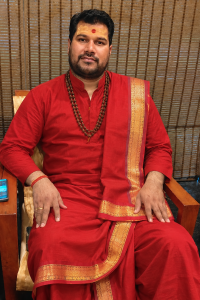
Meet Pandit shivanand Guruji
Why Trimbakeshwar Matters
Trimbakeshwar Temple is located in the beautiful town of Trimbak, near Nashik in Maharashtra, and stands as a revered symbol of Lord Shiva’s divine presence. This sacred site, home to one of India’s 12 Jyotirlingas, attracts thousands of pilgrims each year. Not only does it offer a deep spiritual connection, but it also provides a serene environment where worshippers can participate in powerful pujas, such as Kaal Sarp Dosh and Pitra Dosh, to seek peace and blessings. In this blog, we will explore the history, architecture, and spiritual importance of Trimbakeshwar Temple, along with the unique rituals that make it an exceptional destination for religious ceremonies.
Quick Facts
- Location: Trimbak, Nashik, Maharashtra
- Significance: One of the 12 Jyotirlingas of Lord Shiva
- Unique Feature: Three-faced lingam representing Brahma, Vishnu, and Shiva
- Origin of Godavari: The river originates from Brahmagiri Hill near the temple
- Built: 18th century (1755–1786) by Peshwa Balaji Baji Rao
- Festival: Maha Shivaratri, Shravan Month, Simhastha Kumbh Mela
- Sacred Rituals: Kaal Sarp Dosh, Pitra Dosh, Rudrabhishek, Narayan Nagbali, Tripindi Shradh
- Temple Timing: Open daily from 6:00 AM to 9:00 PM
- Best Time to Visit: October to March
Ancient Legends & Puranic Origins
The Myth Behind the Temple and Godavari River
The history of Trimbakeshwar Temple is closely linked to ancient stories in the Shiva Purana. According to these stories, Sage Gautama and his wife, Ahalya, once lived in Trimbakeshwar. During a severe drought, Sage Gautama prayed to Lord Shiva for divine intervention. Pleased with his devotion, Lord Shiva instructed the Ganga River to flow through the region to alleviate the drought. However, due to a curse, the river appeared only as a stream, which later transformed into the Godavari River. This divine connection between the river and the temple remains a significant part of the temple’s story.
The Three-Faced Lingam: A Symbol of Creation, Preservation, and Destruction
The name Trimbakeshwar is derived from the Sanskrit words “Tri” (three) and “Ambaka” (eyes), referring to the temple’s unique three-faced Jyotirlinga. This lingam represents the Trimurti, the holy trinity of Hinduism: Brahma (the creator), Vishnu (the preserver), and Shiva (the destroyer). This triad of deities is worshipped together, making the Trimbakeshwar Temple a unique site for Lord Shiva devotees.
The Construction of Trimbakeshwar Temple: A Historical Journey
Reconstruction Under Peshwa Balaji Baji Rao
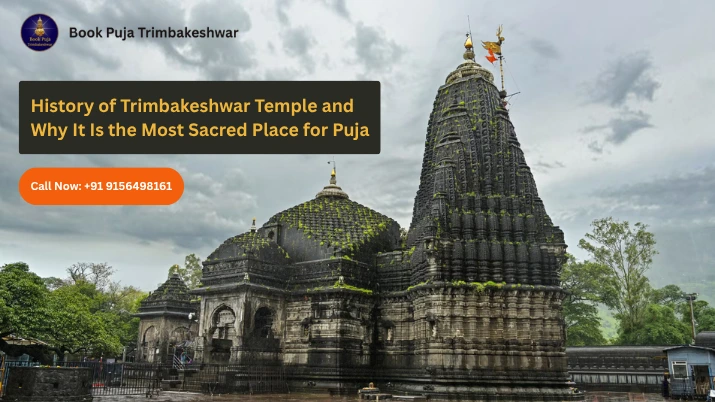
Though Trimbakeshwar Temple has been a significant spiritual site for centuries, the current structure was built in the 18th century by Peshwa Balaji Baji Rao (Nana Saheb). The original temple was destroyed, and the reconstruction began in 1755, culminating in its completion in 1786. The temple was constructed using black basalt stone in the Hemadpanthi architectural style, known for its simplicity and durability. This style can be seen in many structures from that era, including the iconic Trimbakeshwar Temple.
Spiritual Importance: Why Trimbakeshwar is Chosen for Pujas
Trimbakeshwar Temple is not only a religious landmark but also a hub for important spiritual rituals. It is most renowned for hosting rituals such as Narayan Nagbali, Kaal Sarp Dosh, Tripindi Shradh, and Rudrabhishek, all of which are believed to cleanse the soul and bring peace.
The Role of Certified Purohits
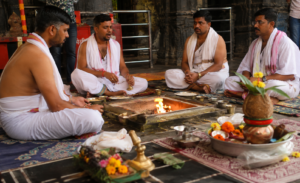
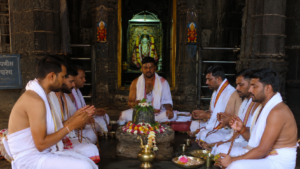
One of the special aspects of Trimbakeshwar Temple is the presence of certified and experienced pandits who perform all sacred rituals with devotion and accuracy. These pandits are well-trained in Vedic traditions and have years of experience conducting important pujas like Kaal Sarp Shanti, Pitra Dosh Puja, and Narayan Nagbali. Their deep knowledge and spiritual guidance help devotees perform each ritual in the correct way to receive the best results and blessings from Lord Shiva.
Unique Features of Trimbakeshwar Temple
- Three-faced Jyotirlinga: The temple’s main deity, the
- three-faced lingam, represents the divine trinity of Brahma, Vishnu, and Shiva.
- Kushavarta Kund: A holy pond believed to be the source of the Godavari River, where devotees take a dip before performing prayers.
- Brahmagiri Hill: A significant site for spiritual seekers, where the Godavari River originates. It is a place of great reverence and a popular site for pilgrims to visit after performing their rituals.
Trimbakeshwar Temple’s Architecture: A Marvel in Black Basalt
Trimbakeshwar Temple is an exceptional example of Hemadpanthi architecture, which emphasizes strong, minimalist stone construction. The temple is made primarily from black basalt stone, giving it an imposing and timeless presence. The temple tank, called Amritavarshini, and its sacred ponds, such as Bilvatirtha and Mukundatirtha, are essential features of the temple’s intricate design.
The Godavari River: A Divine Connection
The Godavari River, often referred to as the Ganga of the South, holds great religious significance. It is believed that Lord Shiva’s blessings allowed the Ganga to flow in the form of the Godavari River after Sage Gautama’s penance. Pilgrims who visit Trimbakeshwar not only seek the blessings of Lord Shiva but also pay homage to the river, which is believed to purify sins.
Why Trimbakeshwar is the Best Temple for Pujas
Trimbakeshwar Temple stands out as a prime destination for performing pujas due to its rich spiritual history, the sacred three-faced Jyotirlinga, and the presence of dedicated priests who carry forward an unbroken tradition of conducting rituals. The Certified Purohits ensure that every puja performed at the temple is authentic and holds the utmost spiritual power.
Whether you seek peace, health, or liberation from ancestral curses, performing a ritual at Trimbakeshwar Temple is believed to provide divine blessings that resonate deeply with the devotee’s life.
Book Your Puja or Get in Touch
FAQ
What is the history of Trimbakeshwar Temple during Aurangzeb’s rule?
During the reign of Mughal Emperor Aurangzeb, many Hindu temples were destroyed across India, including parts of the Trimbakeshwar Temple. However, the temple was later rebuilt by the Maratha ruler Peshwa Balaji Baji Rao (Nanasaheb Peshwa) in the 18th century. The structure we see today reflects Maratha-style architecture and stands as a symbol of devotion and resilience.
How old is the Trimbakeshwar Temple?
Trimbakeshwar Temple is believed to be over 250–300 years old in its current form, rebuilt in the 18th century. However, the site itself has been a place of worship for thousands of years, mentioned in ancient texts like the Shiva Purana and Padma Purana.
What is the mystery behind Trimbakeshwar Temple?
The mystery lies in the unique Jyotirlinga, which has three faces symbolizing Brahma, Vishnu, and Mahesh (Shiva) — the only Jyotirlinga of its kind in India. Devotees cannot touch the lingam directly, and the temple’s inner sanctum constantly remains moist, believed to signify Lord Shiva’s divine energy.
Who built the Trimbakeshwar Temple?
The temple was rebuilt by Peshwa Balaji Baji Rao (Nanasaheb) in the 18th century after it was damaged during Mughal invasions. The temple is made of black basalt stone and beautifully carved in the Nagare style of Maratha architecture.
What is the story behind Trimbakeshwar Temple?
According to the Shiva Purana, Sage Gautama prayed to Lord Shiva to end a drought in Trimbak. Impressed, Lord Shiva released the Ganga River (now known as Godavari) from this place. Later, Lord Shiva stayed here as the Trimbakeshwar Jyotirlinga, making it one of the twelve sacred Jyotirlingas in India.
Which day is considered best to visit Trimbakeshwar Temple?
Mondays, Maha Shivratri, Shravan month (July–August), and Pradosh Kaal are considered highly auspicious days to visit the temple. Devotees also prefer visiting during Nag Panchami and Amavasya, especially for performing pujas like Kaal Sarp Dosh Nivaran.
Is Trimbakeshwar Temple a Shakti Peeth?
No, Trimbakeshwar is not a Shakti Peeth; it is one of the 12 Jyotirlingas of Lord Shiva. However, it holds equal spiritual power because Goddess Parvati is also worshipped here along with Lord Shiva, making it a highly sacred site for both Shaivites and Shaktas.



Leave a Reply