
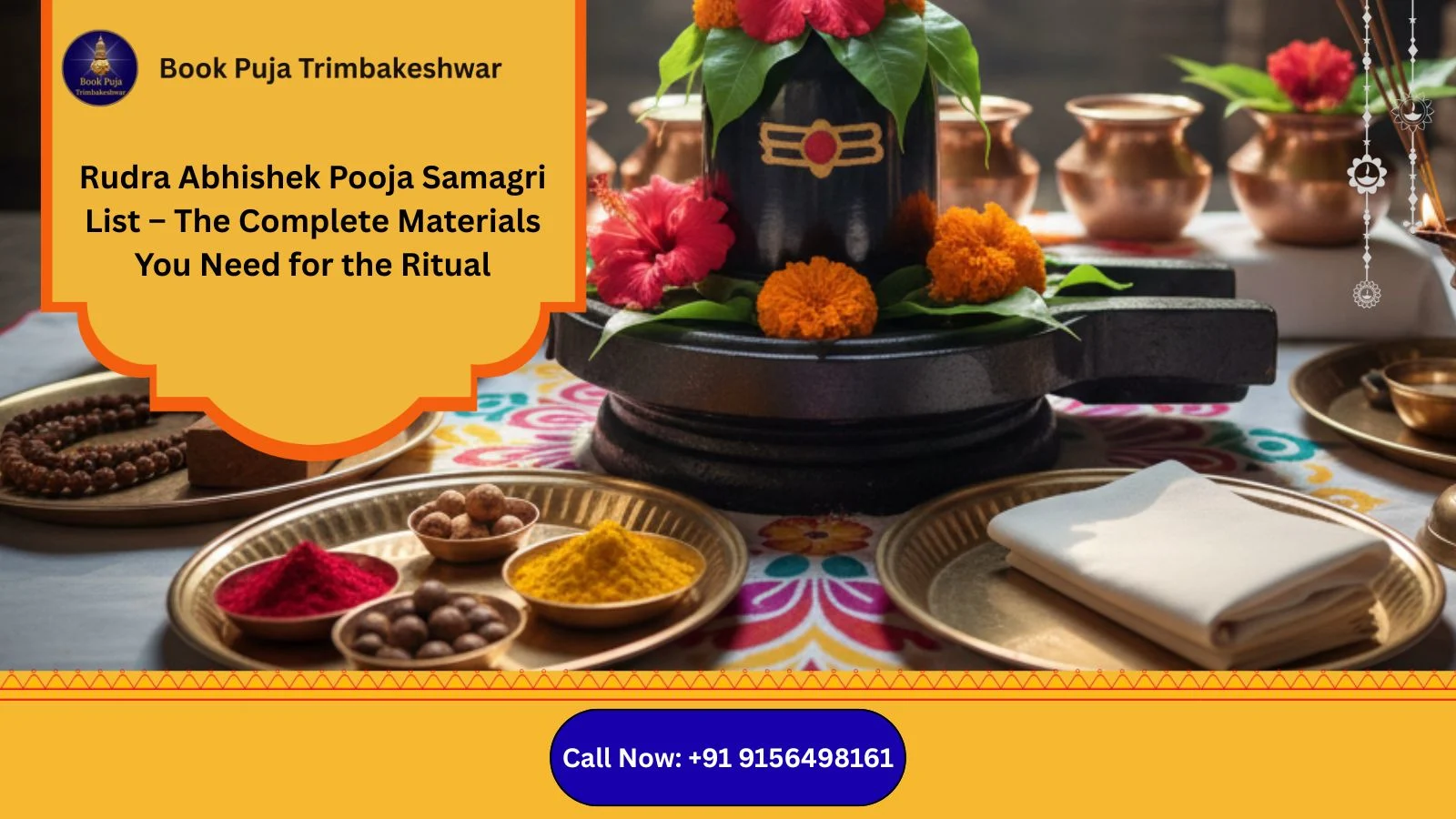
Rudra Abhishek Pooja Samagri List – The Complete Materials You Need for the Ritual
Meet Pandit shivanand Guruji

Introduction
One of Shiva’s most important Abhishekas is that of Rudra (Shiva Linga Abhishekam), which includes bathing the Shiva Linga with pious and holy liquids, offering it, and chanting mantras in reverence and devotion to God. This puja derives its full spiritual energy from both the devotion offered and the complete Rudra Abhishek Pooja Samagri List used during the rituals. Every piece has meaning, and so having the right samagri, which has both meaning and energy, is necessary.
This is also true when you perform the puja at the sacred and holy Trimbakeshwar. The temple is famous for its ancient puja vidhi, so following the given samagri list, we can perform the puja most authentically. This guide assists you with each item, explains its purpose, and shows how to set it for puja.
Why the Right Samagri Matters for Rudra Abhishek Pooja
During the Shiva puja, every offering has its own meaning and importance. Offering Milk means purity. Bilva leaves help cool down the energy, and honey means sweetness and fulfillment. When we provide the correct items, the custom aligns with all the intricate details of the ancient ritual and achieves the desired spiritual outcome.
Incorrect Rudra Abhishek Pooja Samagri can negatively affect the flow of the puja. Ideally, the pandit will have to skip specific steps, or the ritual will be incomplete. The right materials help sustain a pure atmosphere, preserve the essence of the tradition, and set the stage for the maximum flow of Lord Shiva’s blessings.
Core Samagri List for Rudra Abhishek Pooja
Below is the complete Rudra Abhishek Pooja Samagri List used in most traditional rituals.
Liquid Offerings
Here is the complete list of samagri needed for Rudra Abhishek Pooja, a ritual offering to God Shiv practiced in almost all traditional rituals.
- Water (Gangajal): Purifies the Lingam and also begins the ritual. Considered the purest form of water, Gangajal is the best.
Milk, curd, and ghee are all a part of panchamrit. Milk, curd, and ghee all have effects of bringing in positivity, prosperity, and strength, respectively.
During the Abhishek, honey and sugarcane juice are also offered, as they symbolize fulfillment and divine grace.
Solid Offerings and Leaves
- Bilva leaves (Bel Paan): These leaves represent the Hindu trinity: Brahma, Vishnu, and Mahesh. They must be fresh and unbroken.
- Flowers and fruits: Shown for devotion and purity, and fruits are for gratitude and sustenance.
- Vibhuti: It is used as a sacred mark, symbolizing simplicity and an unmaterialistic outlook.
- Turmeric and sandalwood paste: Used for sweet scent and cleansing, and they provide a calming energy during the ritual.
Fire Ritual Materials
- Havan samagri: A mixture of herbs and wood is used in the fire offering. They help purify the environment, increasing the benefits of the puja.
- Ghee for fire: Steadying the flame requires pure cow ghee.
- Camphor and incense sticks: Used for space cleansing and to invite the presence of the divine.
Others and Accessories
The cloth for the idol (Shiva Lingam) may need to be decorated and covered after the Abhishek. Need to cover up after the Abhishek.
- Plate (thali), spoon (ladduka), and small vessel: These are used to hold offerings and pour liquids.
- Traditional containers: These help hold items and maintain purity while in use.
Preparing each item for some other reason; one of these reasons is to recall that it is in its purest form, in the context of the stuff. That’s to prepare them in advance for most reasons.
Optional or Enhanced Samagri for Premium Rituals
For extended versions like Ekadash Rudra or Laghu Rudra, additional items may be used. These include:
- Haldi-kumkum kit for expanded offerings
- Decorative gem or stone offerings
- Special silk cloth for the idol
- A ritual mirror used in some variations
Premium kits are usually chosen for larger family ceremonies or when devotees wish to perform the puja for health, prosperity, or peace. Costs for these versions vary based on the number of pandits, duration, and additional offerings.
Samagri Specifics at Trimbakeshwar Temple
More extended versions like Laghu Rudra and Ekadash Rudra may require some additional items, such as:
- Haldi-kumkum kits for additional pradhikshinas
- A dedicated silk cloth for the deity
- A ceremonial mirror is included in some variations
Premium kits are often selected for large family functions or when the worshippers are conducting the puja for peace, health, or prosperity. Prices for such versions depend on the additional offerings, the length of the prayers, and the number of pandits.
How to Prepare and Arrange Your Samagri List: Step by Step
Getting ready for pujas:
The most important thing for me is to launder my clothes and to clean the space. The puja items should be available the night before. Be sure to check that all puja items are still good and that all Bilva leaves, flowers, and fruits are fresh.
Puja day:
The first thing we do is Sankalp, followed by the Panchayatana name invocation and Sankalp. Each pujat will do this. Liquid offerings are conducted during the ABHISHEK. Then we do Aarti. You do the puja by doing all the Steps.
What to do after the puja:
Sharing and eating prasad is allowed. For all water and milk, we should give jal and dairy for burning an offering of red cloth and a diya. Any specifics should be asked to your pujat pandit.
Cost Guide for Samagri and Puja at Trimbakeshwar
There are different types of samagri kits to choose from. For a standard samagri kit, the cost is usually reasonable. Still, the premium kits for significant rituals are a bit pricier. Other costs could include puja pandit fees, temple donations, and the fee for the chosen auspicious day.
Buying authentic items locally and booking your puja in advance will help you save money.
Book Your Puja or Get in Touch
FAQs
1. What is the minimum samagri required for Rudra Abhishek?
To conduct the ceremony properly, the basic materials needed are listed in the Rudra Abhishek Pooja Samagri List. These materials are milk, water, Bilva leaves, flowers, and frankincense. A simple puja would therefore need these things.
2. Can I substitute any item from the Rudra Abhishek Pooja Samagri List?
Most items, if approved by the pandit, may be substituted, but Bilva leaves, ghee, and pure water are not to be changed. It is wise to check first if you are planning to make alterations.
3. Does Panditji provide any items from the Rudra Abhishek Pooja Samagri List?
Panditji may provide some basic samagri, but devotees are generally required to bring Bilva leaves, fruits, and flowers, as well as the ingredients for Panchamrit on their own.
4. When should I purchase the items from the Rudra Abhishek Pooja Samagri List?
The best time to buy the samagri is a day before the puja. This ensures that leaves, flowers, and fruits are fresh and pure for the ritual.
5. Can I order an online kit for the Rudra Abhishek Pooja Samagri List?
Yes, provided the vendor is reputable and offers fresh, unadulterated items, you can get an online kit.
6. How early should I prepare the Rudra Abhishek Pooja Samagri List before the ritual?
Prepare the complete list a few hours before the puja. Keep liquids, utensils, and offerings arranged so the ritual flows smoothly.
7. Is there a standard Rudra Abhishek Pooja Samagri List for Trimbakeshwar?
Most pandits follow a standard list, but some items may vary depending on the type of Rudra Abhishek, such as Laghu Rudra or Ekadash Rudra. Always confirm with your pandit.
8. Are all items in the Rudra Abhishek Pooja Samagri List mandatory for a home puja?
No, a home puja can be performed with a simpler set of items. Still, a more complete samagri is more beneficial and traditional.